
I’m on my way
I’m on my way
Home sweet home
Yeah, I’m on my way
Just set me free
Home sweet home
Have you heard of Mötley Crüe? Maybe not. They’re an American heavy metal band who’ve been around for four decades and who will be touring Australia from November. Why choose them? It was the logo that was appealing.
There’s another Sheep Grazier Warning today from the Bureau of Meteorology. We don’t keep sheep and the few we have seen in a field near here have either been shorn or have skimpy fleeces. Either way they seem ill prepared for the icy winds that have been blowing across the Southern Highlands this week. ‘We did warn you’ said friends in the Northern Beaches before we moved here. (8C early morning at Bondi and -3C here today; the chill factor makes temperatures seem even lower). We are just a little envious of houses with wood burning stoves. Looking at properties to rent last summer they did not seem a priority, despite the agent saying we would be glad of one.
When we first arrived in Australia Madame and I lived on the edge of Ku-ring-gai Chase, the home for thousands of years of the Darramuagal or Darug people. There are several hundred sites here showing the rich cultural heritage of these First Nations people. They include rock engravings, burial sites, axe grinding grooves and other places that show evidence of occupation. Early settlers used the term terra nullius meaning ‘land belonging to no one’. No comment.


A humpy: also known as a gunyah or wurley, is a small, temporary shelter traditionally used by First Peoples. These impermanent dwellings, made of branches and bark, are sometimes called a lean-to, since they often rely on a standing tree for support. It’s now considered a slang word and little used. Apologies to Humpy Co. manufacturers of up-market garden dwellings, granny flats and ‘tiny home alternatives’.
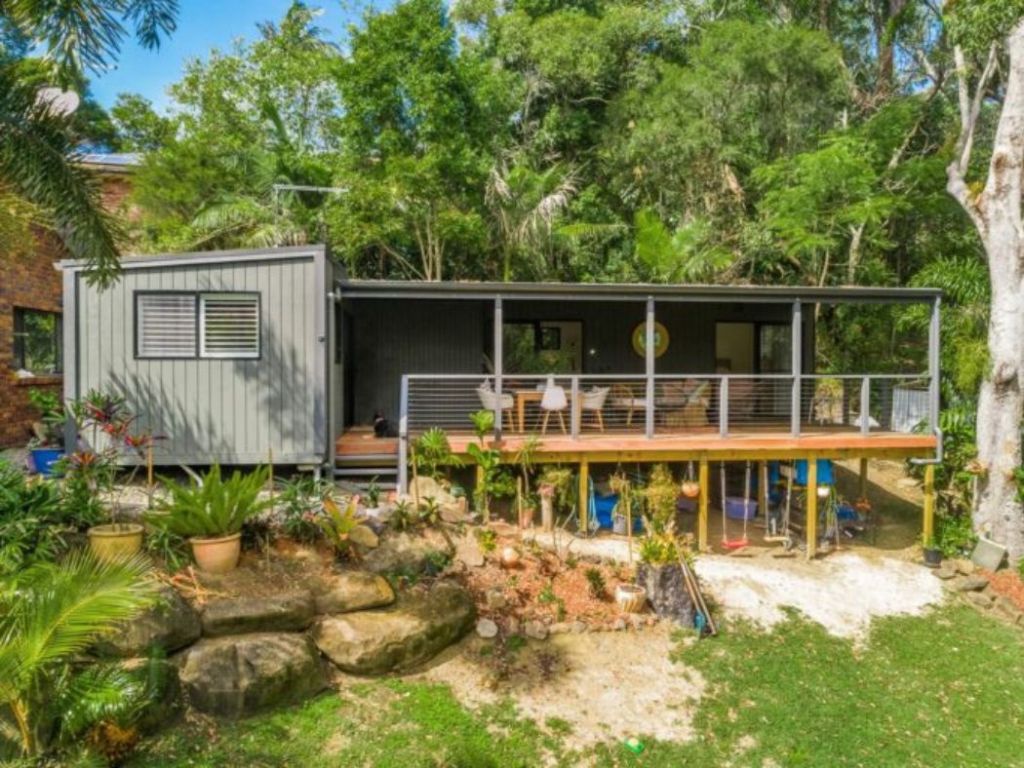
So, what is your home sweet home built of? (Tricky one this, but the dictionary says it’s more correct than ‘built from‘. (Today’s useless fact).
Madame and I have progressed from flint and brick in East Anglia, to double brick with insulation (bricks courtesy of York Handmade) then stone in the Pays Basque and now timber framed with cladding Down Under. There’s been no shortage of wood here, but forests eventually run out of trees unless they’re replanted. The UK is an example.
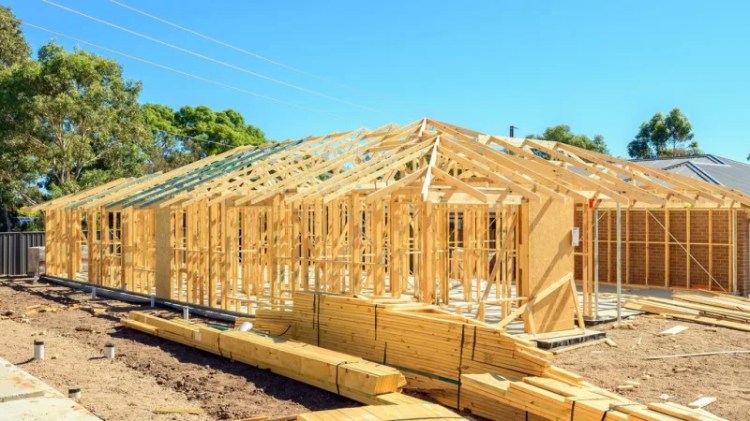
Timber has been used to build homes since humans could construct them. Many villas (bungalows to you) in Australia are built with a wooden framework and with interior stud walls, which are adequate until you try to hang heavy pictures. Unless constructed by reputable builders, using seasoned and treated wood, there can be problems if the timber shrinks, swells or twists. Don’t forget termites either. Our neighbours in the French Pays Basque discovered a pile of fine wood dust hidden behind the main pillar holding the property up. This is a building dating from the 1700s with stone walls at the base a metre thick. The timber was oak but the entire pillar had to be replaced or the roof would have collapsed.
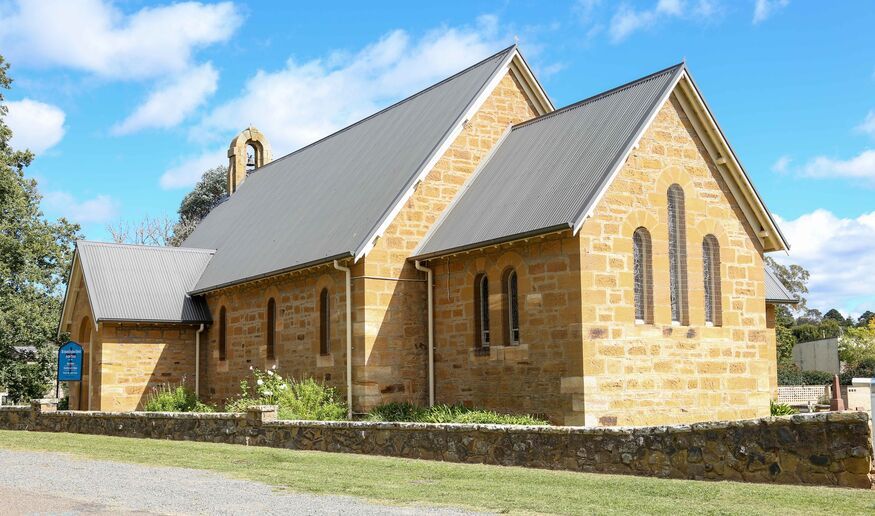
We’ve not been there, yet, but we’re told the majority of homes in Perth are double brick, meaning two skins of brickwork, probably with insulation between the two. Much more sensible but more costly. There are stone buildings in NSW outside Sydney and the major towns- including two locally constructed with attractive sandstone: the Anglican church at Sutton Forest and the Catholic church at Moss vale.

These were the beams in the attic of our maison de maître in SW France – sturdy oak or chestnut that have been there for two centuries and could still be there in two hundred years’ time.

In rural Europe peasants lived in simple huts made of wood. It was easier and cheaper for the poor to build them instead of using stones. In any case stone tended to be the preserve of the rich. The walls of these wooden houses were built of timber frames and were covered with wattles, woven lattices of wood strips daubed with a sticky material usually made of some combination of wet soil, clay, sand, straw and animal dung; not too fragrant on a hot summer’s day?

Wattle and daub house at Hill End, NSW (State Library of NSW)
The first gold rush in Australia began in May 1851 after the prospector Edward Hargreaves, with others, claimed to have discovered gold near Orange. The ‘diggers’, as they became known, had to have shelter, but these were often temporary wooden dwellings because prospectors were regularly on the move, chasing the latest strike.
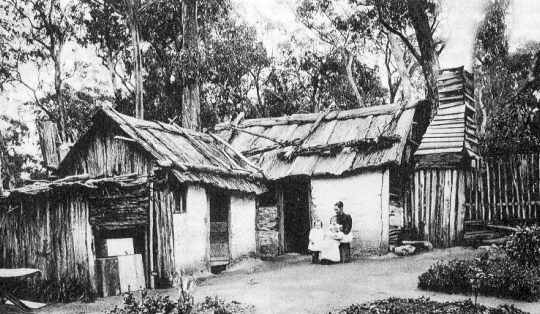
More of a family home

This is a slight improvement and known as a ‘slab’ house
Back to the UK and an even more sophisticated construction known as a cruck house. The inverted V shape means the roof load is carried directly to the ground,


A barn at Leigh Brockamin
The wealthy made good use of the abundant oak and beech forests in Europe and constructed some remarkable buildings using the wattle and daub technique.

Speke Hall is a wood-framed wattle and daub Tudor manor house near Liverpool. It is one of the finest surviving examples of its kind and is owned by the National Trust. Best not to get involved here over the previous owners’ links to the slave trade. The N.T. really got the bit between its teeth over slavery, so much so that many members cancelled their subscriptions and told the organisation to concentrate on its properties and not get involved in politics.
For too many years, wood had been used for building, heating, making charcoal and for building ships. Henry VIII (he of the six wives) was an enthusiastic shipbuilder, whose pride in his fleet would see it grow from 5 at the start of his reign to 58 by the time of his death. While he may have had many ships, it is the Mary Rose that is remembered as his favourite; launched in 1511 it weighed in at 600 tons. That’s a lot of oak. Regrettably she sank, reputedly in front of Henry, but we weren’t there so it’s only hearsay.

Courtesy of History of the Mary Rose
Cardinal Wolsey wanted to create a grand building where he could host not only King Henry and the royal court but also monarchs from across Europe. Investing huge sums of money, he created the magnificent palace of Hampton Court. This is not the place to get too involved with Tudor history, and how Henry ‘acquired’ the building, but it is one of the most famous buildings in the world, constructed of brick – 28 million of them in this case!

While we were living in France we paid a visit to Toulouse and Albi, the birthplace of Henri de Toulouse–Lautrec; many of his impressive paintings featured the inhabitants of the local brothel. Enough said on that. If you’ve read the novels of Kate Mosse you’ll be familiar with the history of Toulouse in the 13th century, the Cathars and the Albigensian Crusade. It was after this that work commenced on the cathedral. Begun in 1282 it was under construction for 200 years! The grim exterior resembles a fortress, but the interior is lavishly decorated with art and sculpture, a very ornate choir screen, and walls in bright blues and golds. It is claimed to be the largest brick building in the world, hence its inclusion here.


In the Bois de Boulogne 1901
Bricks are, without doubt, one of the oldest known building materials. They date back to 7000BC where they were first found in southern Turkey and around the city of Jericho. The first bricks were sun dried and made from mud. The Romans introduced bricks to Britain but their use declined when they departed. In medieval times, bricks were made by workers kneading the clay and then placing it in wooden moulds. Excess clay was wiped off and the brick shaped clay was removed from the frame.
Brick buildings are not common in Australia but timber framed are. However, there is a strong argument for using steel instead, particularly in a country where termites and humidity are common concerns. Steel frames are strong and fire resistant. A frame provides the structure around which your house is built.

A few years ago a Liberal MP claimed on TV that poorly heated homes caused more deaths in Australia than in Sweden, despite our milder winters, because “we don’t have adequate heating in our homes.” Well, this unleashed a torrent of surveys, some supporting him and some refuting his ideas, but it was admitted that Australia lagged behind when it came to insulating homes. The Guardian (Australian version) didn’t mince words:
Australian housing leaves a lot to be desired in terms of comfort and energy. Single-glazing is still typical, whereas in Sweden double-glazing has been required by building codes since 1960, with triple-glazing now the norm. Australian homes are leaky too. For many of us, we are paying thousands of dollars a year to heat our homes, only for this heat to escape straight through gaps in the walls. The impact of this? Sky high bills for a start.
Our present rental, about normal size for a suburb, in a quiet, leafy area and well-maintained, is a case in point. The main bedroom (master bedroom in estate agent speak always sounds pretentious) has single glazed windows, 7.5 square metres in total. The two main living rooms have sliding doors adding another 12 square metres! That’s a lot of glass to let the heat out!
Ah well, it’s the shortest day today, so roll on the summer.

 Another Down Under diary