
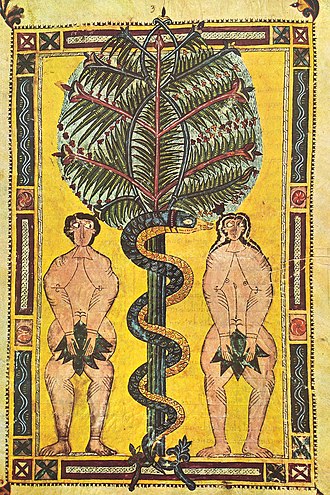
Unless you really do live in the back of beyond you will never be far from a sign informing, cautioning – forbidding even. Verbal warnings have been given to us, from toddler to dotage, since humans could communicate. One of the earliest on record was that given to Adam “…..you must not eat from the tree of the knowledge of good and evil…..” which Eve then did, egged on by the serpent. You may, or may not, subscribe to this story and theology has no place in this post. This is about everyday signs, mostly common, sometimes bizarre; but the story of Adam and Eve has, over the centuries, generated a wealth of works of art.

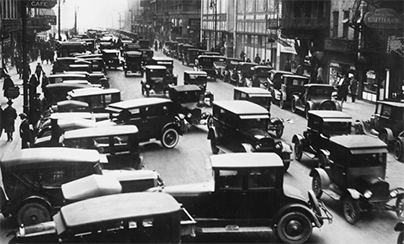
Motoring has developed beyond recognition since The Locomotive Act of 1865 in England. This became known as the Red Flag Act, thanks to its extraordinary stipulation that any self-propelled road vehicle had to be preceded by a person walking at least 60 yards ahead, carrying a red flag. America passed a similar, short lived, law.

It wasn’t long before road signs were introduced to cope with the rapid increase in traffic. You can see why:
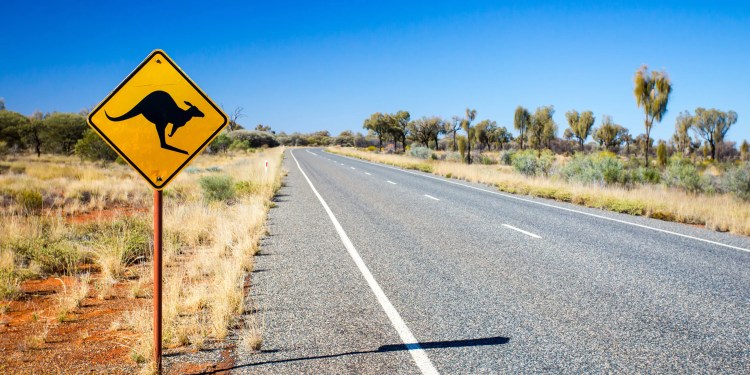
Kangaroo signs are common in Australia, even near built-up areas. These indigenous marsupials are moving closer to human habitations as their land is gradually swallowed up for yet more buildings. It’s no joke if you hit one; they can weigh in at up to 50kg and can write off a vehicle; it pays to be wary on country roads, particularly at dusk.
This sign is, supposedly, genuine. If so, don’t stop the car and investigate!
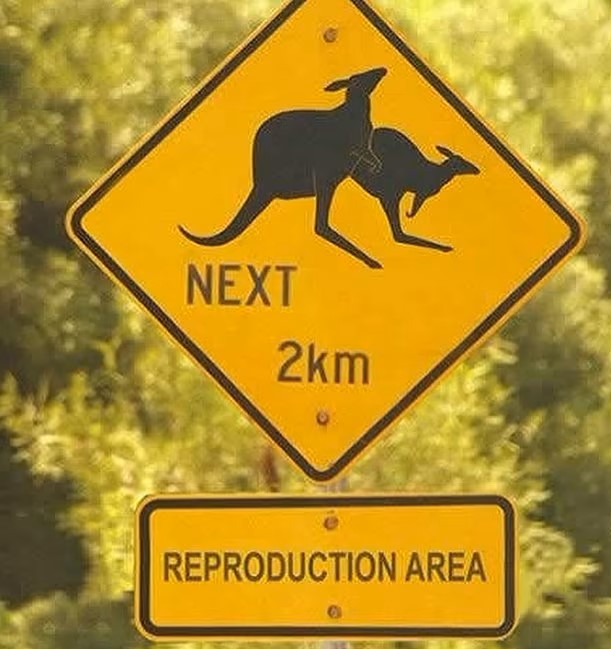
And this one?

This is special to Christmas Island. Sir David Attenborough described the red crab migration as ‘like a great scarlet curtain moving down the cliffs and rocks towards the sea’.


In our previous life this sign, ‘un train peut-en cacher un autre‘, was a common sign by railway tracks. For non-linguists it says that there could be another train behind the one that is passing.

“One Train May Hide Another” by the late Kenneth Koch is a poem that uses the metaphor of a train crossing to illustrate how one thing (like a moment in life) can obscure or hide another. Not everything is black and white. It was on a trip to Kenya that he saw a sign at a railroad crossing and wrote this poem out of that experience:
In a poem, one line may hide another line,
As at a crossing, one train may hide another train.
That is, if you are waiting to cross
The tracks, wait to do it for one moment at
Least after the first train is gone. And so when you read
Wait until you have read the next line—
Then it is safe to go on reading. …


Madame and I made a visit to Bayonne, the charming coastal Basque city famed for ham and chocolate. We were walking through the medieval streets and passed a beauty salon. In the window was this cheeky poster. You’ll get the meaning if you substitute ‘hairs’ for ‘poils’. Only in France!
Our Basque house was on a bend. Before the turning there was a warning sign. It wasn’t a snow sign as the weather was rarely cold enough. One year it was though. From an upstairs window we watched a car driver wrestle with the slippery corner.
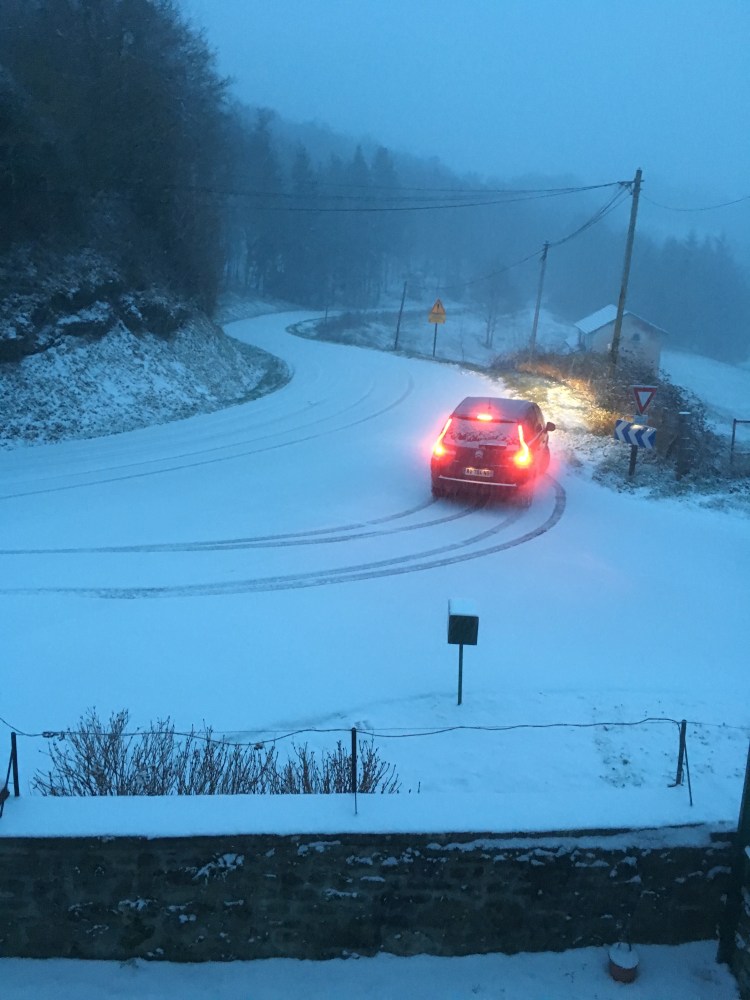
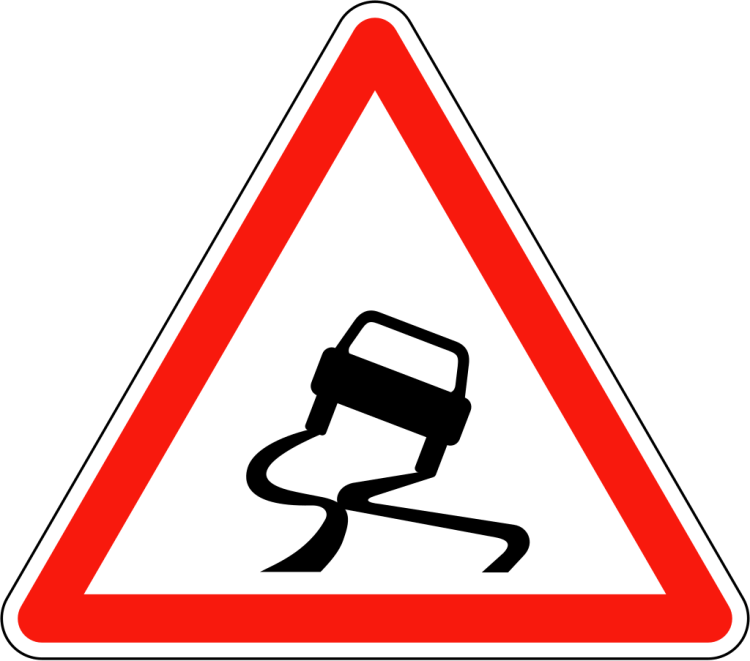
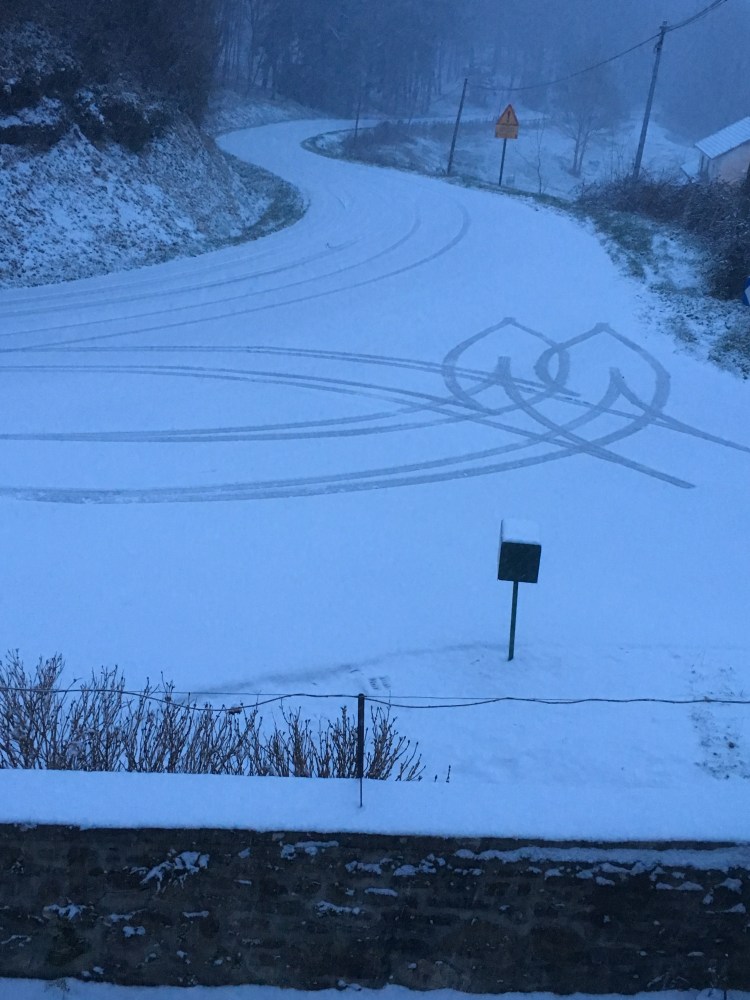
Road signs are designed to give a clear message; this takes some working out………………………
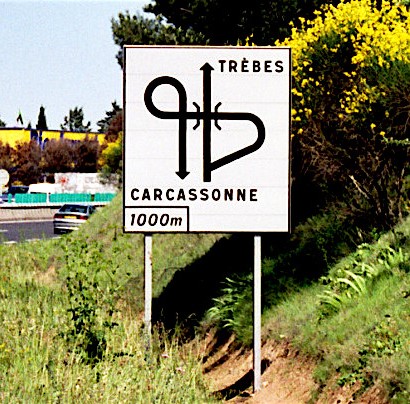
…………and some send out mixed messages! (This was later changed by the council).

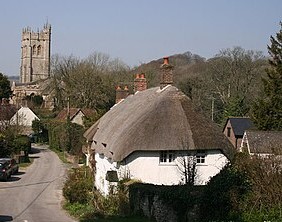
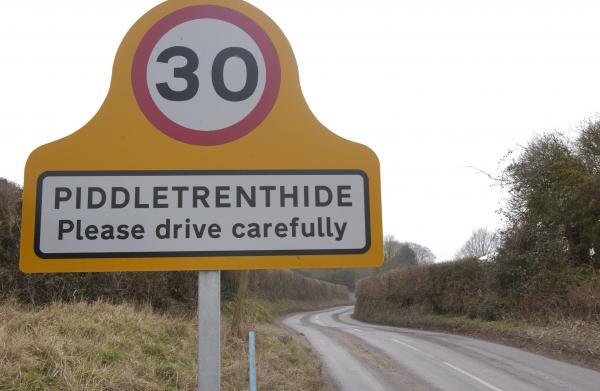
Back in rural England there has been a campaign to improve the ‘Piddle Path’, the existing bridleway which follows the River Piddle from Piddlehinton to Piddletrenthide, approximately 2.5 miles.
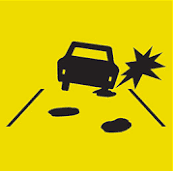
Back to more serious signs. This spells trouble. Wheels, tyres and steering can all be damaged if you hit a pothole at speed. The really tricky ones are those that have filled with water after rain and are hidden.

It’s hardly surprising that the most popular vehicle sold Down Under in 2024 was a ‘ute’ (a solid utility vehicle for the uninitiated), similar to a pickup truck elsewhere. These were supposedly developed by Ford as the result of a letter in the 1930’s from the wife of a farmer in Australia. She asked for “a vehicle to go to church in on a Sunday and which can carry our pigs to market on Mondays”.

Have you heard of flacking (not fracking)?The French for a puddle is une flaque (d’eau). A street artist called Ememem coined this word after seeing a pothole outside their workshop in Lyon and filled it with mosaics. They (sex not known and prefer to remain anonymous) haven’t looked back and their work has spread beyond France.

So, why ‘pothole’? One source claims the word originated from the Middle English word ‘pot’ meaning a deep hole and was then used in the 1820s to describe geological features in glaciers and rocks. Back to France, where a pothole is called rather charmingly un nid-de-poule, a hen’s nest; so called because hens have a habit of scratching holes for a dust bath or to lay eggs?
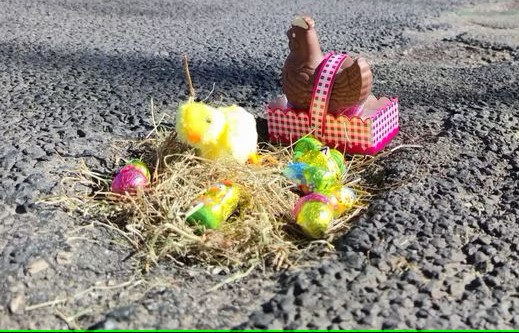
French motorcycling groups wanted to draw attention to the bad state of many roads and highlight the dangers that potholes can bring to riders of two-wheeled vehicles so they created hens’ nests in the holes, complete with eggs and fluffy yellow chicks.
Perry Taylor rounds off the post with one of his humorous ink drawings of life in the SW of France; perrytaylor.fr

 Another Down Under diary