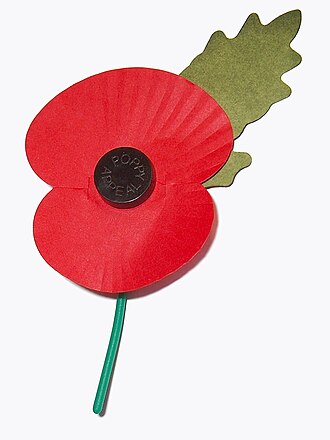
On 11 November Madame and I would stand with the residents in our village in France. Monsieur le Maire, or the senior military person, would make a brief speech and the names of all those killed in action in WW1 were read out. After each name we would reply ‘mort pour la France’. In a village of less than 500 the number of dead was 32.

That war did not end at 11.00 hours, on day 11 of the 11th month. An armistice is a ceasefire, not an official end to war. The original one was for a period of 36 days, after which it had to be renewed. This was done four times before the Treaty of Versailles was signed. General John Pershing, Commander of the American Expeditionary Force, did not approve of the armistice. Consequently he gave no instructions to his commanders to suspend any new offensive action during the remaining hours. (Gov.UK)
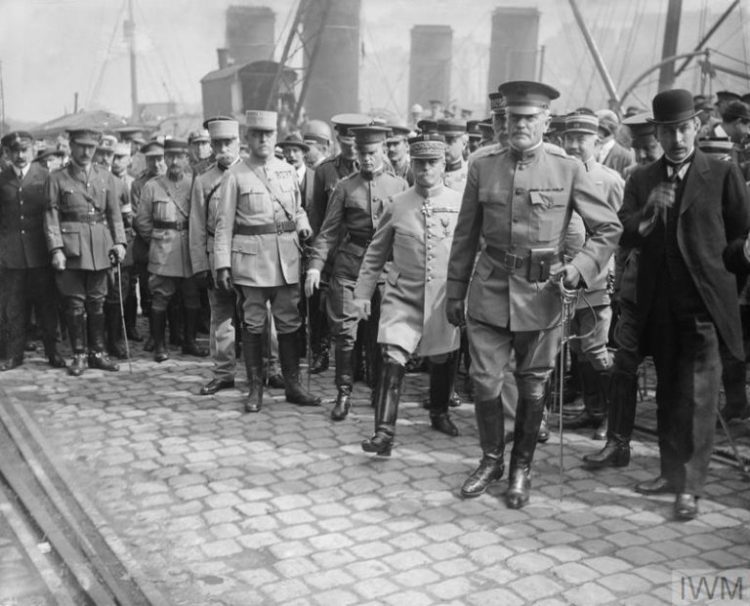
‘The war that will end war’ was the title of the 1914 book by HG Wells. This developed into the satiric phrase “the war to end all wars”. The terms of the armistice alone sowed the seeds for WW2. Albert Einstein, on the other hand, is famous for his quote, ” I don’t know with what weapons World War III will be fought, but World War IV will be fought with sticks and stones.” This was a warning that a future major war could be so destructive that it would cause the collapse of civilization, forcing humanity to regress to a primitive state.
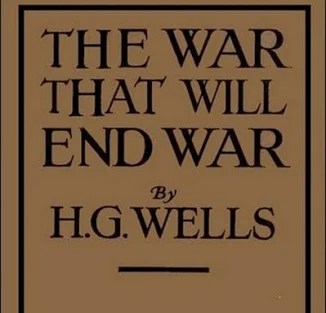
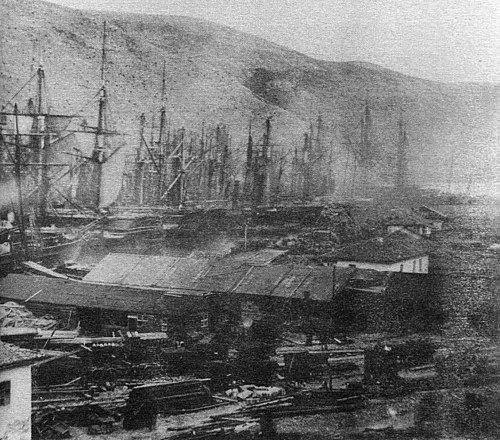
Military trains were primarily used to carry supplies and ammunition to the front but, well before WW1, the army realised the need to adapt trains to carry the wounded. You have to go back to the Crimean War (1853), which was one of the bloodiest wars in the 19th century, for the first recorded train.
As a result of having to deal with massive numbers of casualties, many medical innovations came out of the this war. Florence Nightingale gained fame by revolutionizing the nursing profession. A promotional postcard was produced by Reckitt and Sons commemorating her shortly after her death.

The idea of using hospital trains would find its way to America during the Civil War. In 1861, when the Civil War began, there were more than 30,000 miles of railroad tracks in the North, and only 8,000 miles in the South. While the North had a clear advantage, the South began to use its railroad system almost immediately for transferring troops and supplies. It was the use of the railroad by the Confederate Army that gave them a tactical victory at First Bull Run/Manassas. It wasn’t until January 1862 that President Lincoln authorized the U.S. government to take control of the railroads in the North. The first priority was to ship army rations, followed by forage for the horses, ammunition, and then medical supplies. The army quickly realized that they could make use of all the empty trains that were returning from the battlefields to transport the wounded. (Source; National Museum of Civil War Medicine).
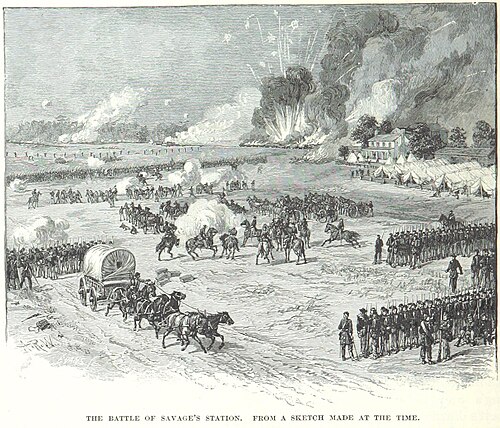
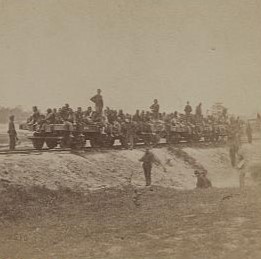
These first hospital trains were nothing more than regular freight trains. Patients were placed in boxcars or baggage cars on wooden floors covered with straw, pine boughs, and blankets. Katherine Wormeley, a Sanitary Commission volunteer, described the wounded as being “put inside the covered cars—close, windowless boxes, sometimes with a little straw or a blanket to lie on, oftener without. They arrive a festering mass of dead and living together.” In addition, the jarring of the train during the journey over uneven rails, combined with the jerking of the cars when stopping and starting, was an excruciating experience for the wounded. (National Museum of Civil War Museum). Because of the stressful conditions that the soldiers were exposed to, the early hospital trains would only transport those patients who were not seriously wounded and could tolerate the taxing journey. The authorities were quick to realise what improvements were necessary.
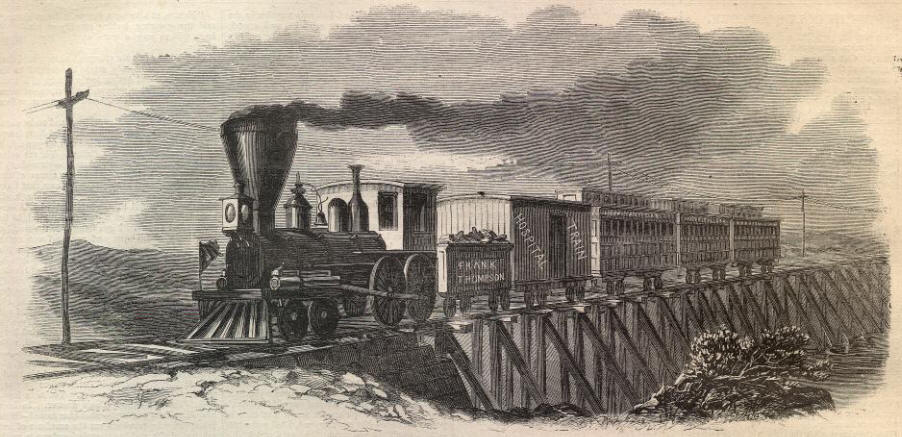

The Second Boer War (the first resulted in a Boer victory and eventual independence of the South African Republic) saw a big improvement in the care of the wounded. 75,000 returned home sick or wounded. The British Red Cross voted a sum of money for the building and equipping of a complete hospital train of seven carriages. It was completed in Birmingham in ten weeks. An arrangement of pulleys in the roof enabled each bed with a patient on it to be raised to the proper level by one man. Each carriage was provided with a stove, a lavatory and a closet. No. 7 contained the kitchen and pantry, including berths for two cooks and a compartment between for the guard. It was named after Princess Christian who was largely responsible for raising the money. How the train was moved to South Africa is not recorded, but presumably by sea.
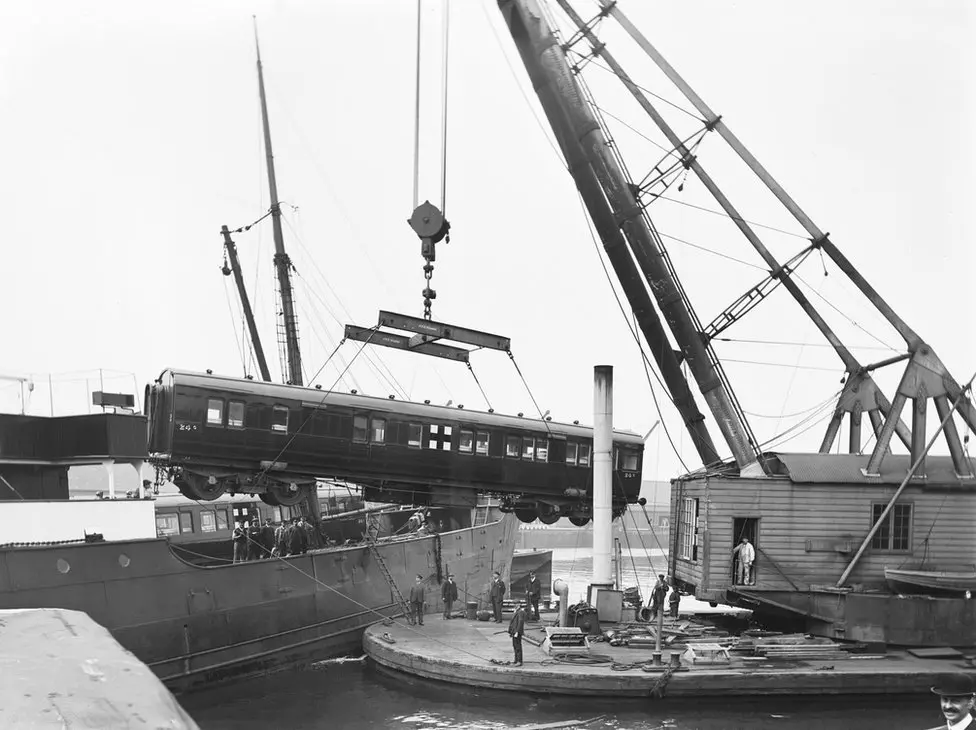
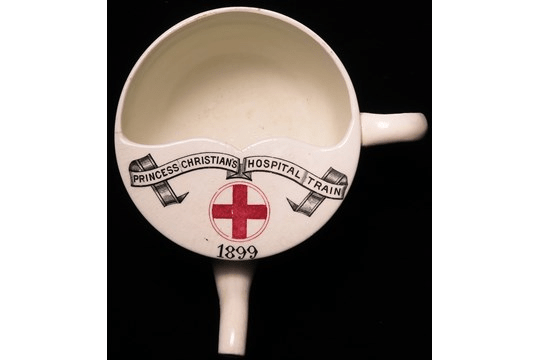

Which brings us back to the appalling casualties of WWI, who we remember today. The Princess Christian train was so successful that the Birmingham factory, which built the original, was asked to produce another with yet more improvements. The comfort of the wounded was naturally the first priority. Every hospital train was to be capable of carrying four hundred patients, with full accommodation for doctors, nurses and orderlies, as well as kitchens and storerooms. 400 may seem generous, but it was a drop in the ocean when you consider the thousands of casualties daily.
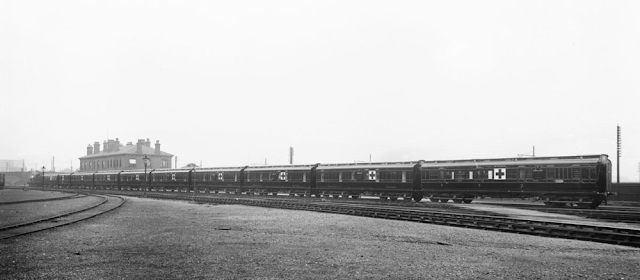
The allied casualties on the first day of the Battle of the Somme were distressing; approximately 38,000 wounded and 20,000 killed (day one only).
The poet, Robert Graves, was badly wounded at the battle of the Somme in 1916 by a shell fragment that went through his lung and he was mistakenly reported as dead.
Excerpt from Good-Bye to All That, an autobiography by Robert Graves
“That evening, the R.A.M.C. orderlies dared not lift me from the stretcher to a hospital train bunk, for fear of it starting haemorrhage in the lung.
So they laid the stretcher above it, with the handles resting on the head-rail and foot-rail.
I had now been on the same stretcher for five days. I remember the journey as a nightmare.”
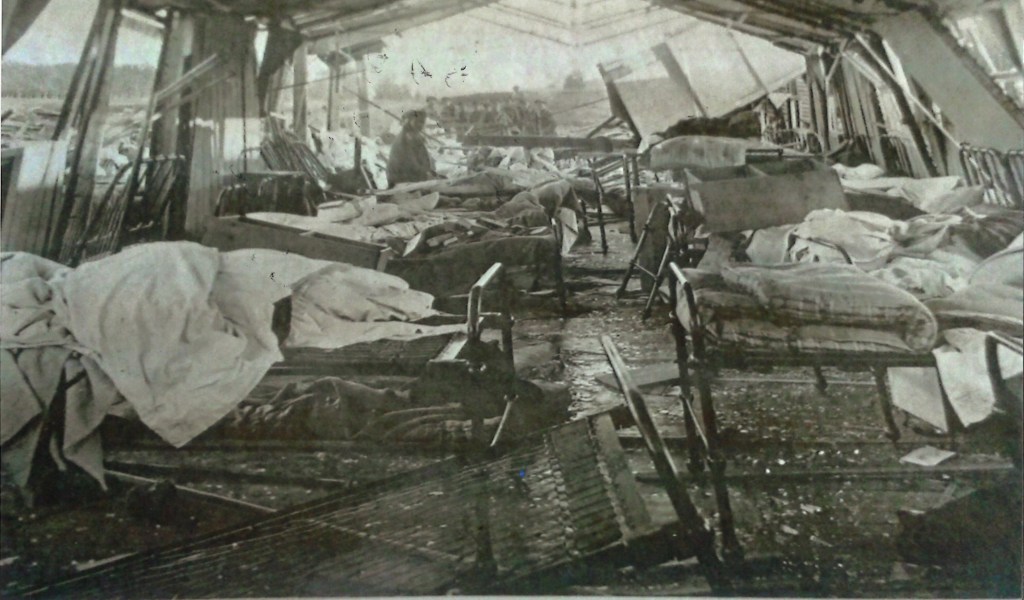
The Australian Imperial Force lost 60,000 men and 152,000 were wounded. To help deal with so many injured and sick soldiers, the Australian Army Medical Corps provided doctors and nurses at its Casualty Clearing Sections in France.
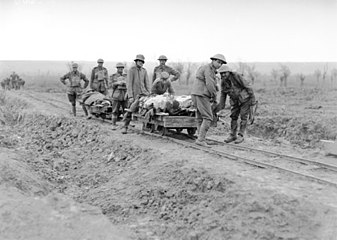
The Gallipoli campaign was a World War1 military operation in which Allied forces landed on the Gallipoli peninsula in April 1915 with the aim of capturing the Dardanelles strait and weakening the Ottoman Empire. The campaign became a bloody and costly stalemate, ending in a military defeat for the Allies, who were forced to evacuate in early 1916. Approximately 60,000 Australians fought at Gallipoli; of these around 8000 were killed and 18,000 injured.
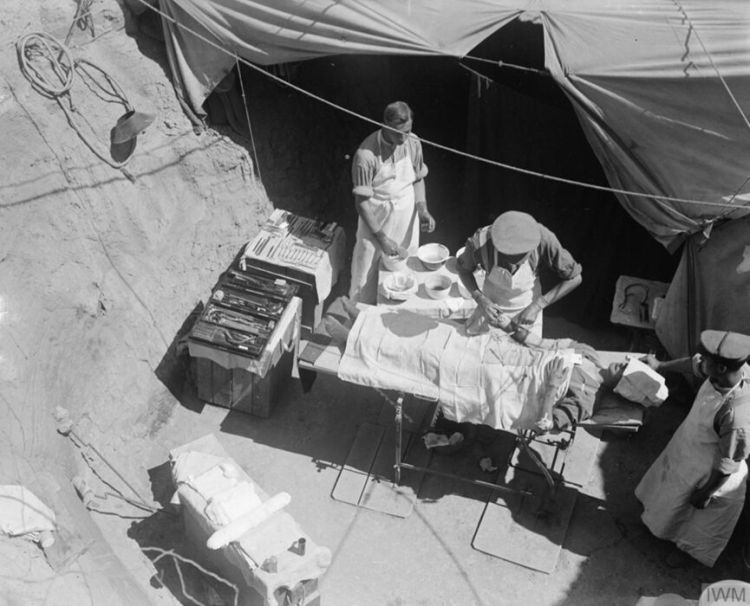
Unarmed, and often under fire, stretcher bearers from the Australian Army Medical Corps carried the seriously wounded away from the front lines to aid posts. Casualties were evacuated by sea via barges, steam launches and hospital ships to temporary facilities on Greek islands and Egypt.
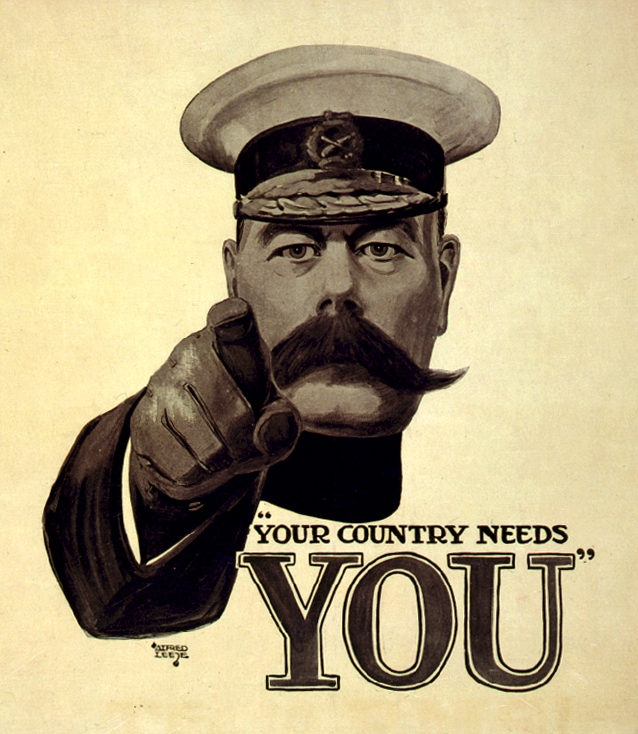
jingoistic: characterized by extreme patriotism especially in the form of aggressive foreign policy.
The initial “spirit of 1914″ saw widespread jingoistic support, with people rushing to enlist and patriotic groups forming, though the initial enthusiasm waned as the war dragged on. In Britain one of the most popular sayings of 1914 was that the war would be ‘over by Christmas’. ”You will be home before the autumn leaves” is famously attributed to Kaiser Wilhelm II, who supposedly said it to his troops as they went off to war. The prevailing feeling was that the war would be short and finished by the end of the year. It is hard now to comprehend the naivety of those in positions of power.
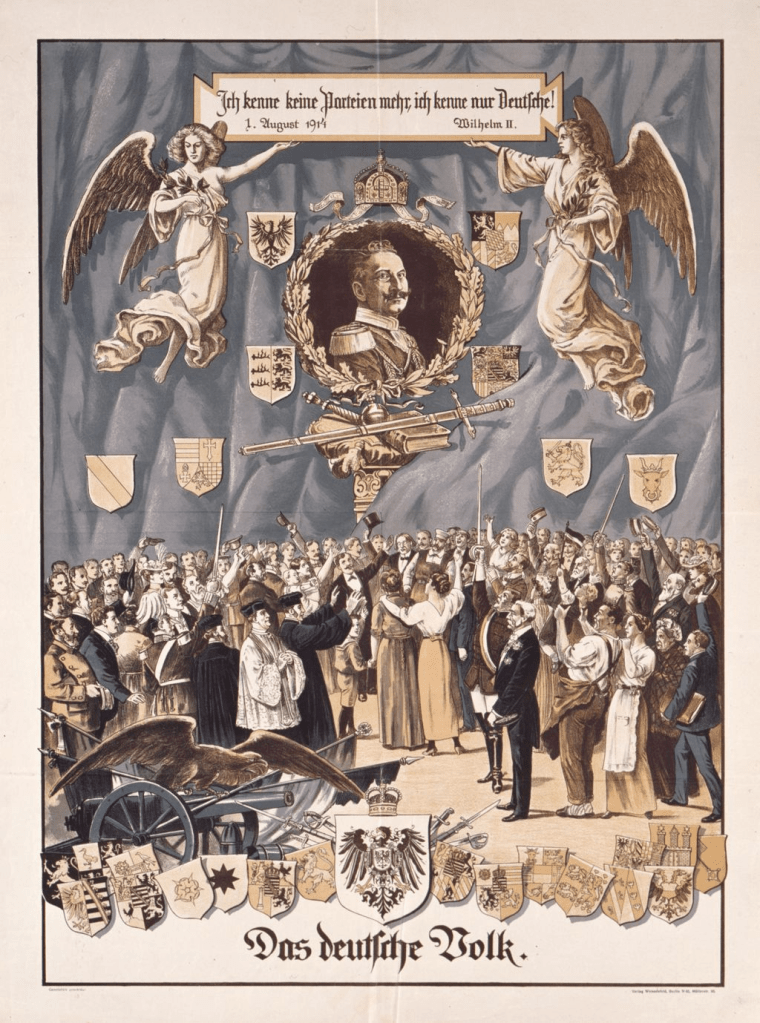
Headed by Kaiser Wilhelm’s famed quotation: “Ich kenne keine Parteien mehr, ich kenne nur noch Deutsche!” (“I no longer know parties, I only know Germans”), the wartime propaganda poster above allegedly shows a cross section of German society. As portrayed here it clearly lacks ‘the lower orders.’ The one below paints a different picture.
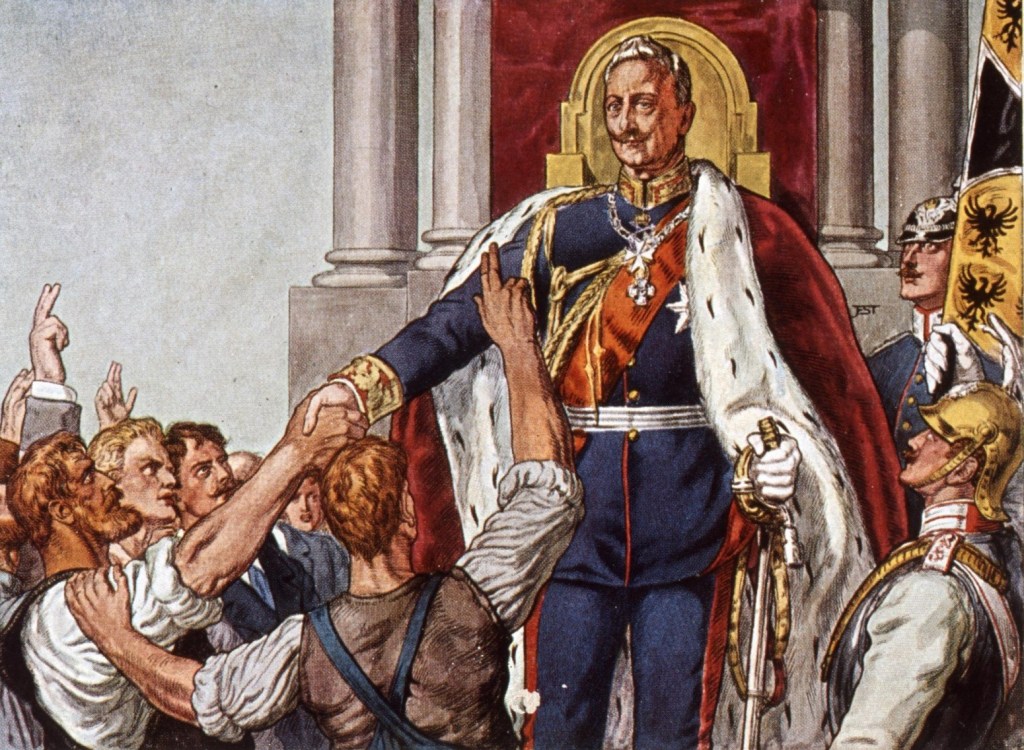
Deutsches Historisches Museum
Censorship, of newspapers, films and letters, was an indispensable war weapon: its task was to keep the people in an atmosphere of utter ignorance and unshaken confidence in the authorities. Censorship was thus authorized in Britain by the Defence of the Realm Act (DORA). Allies and enemies had their own methods. The reality of the trenches had to be sanitized by all means; there was no place for the injured and the dead; but, as the war dragged on, it was impossible to hide the casualties arriving back home.
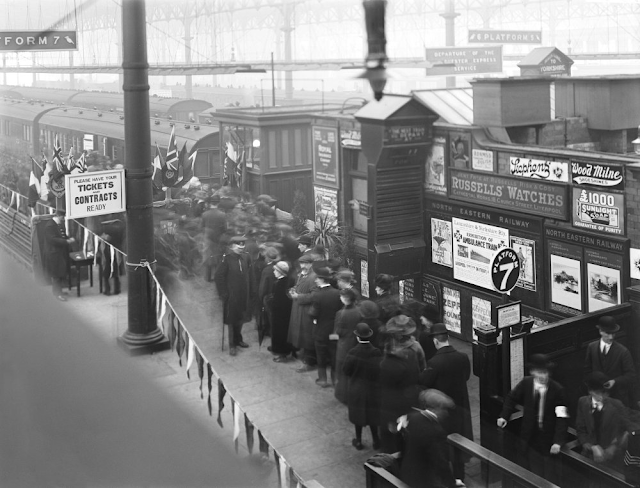
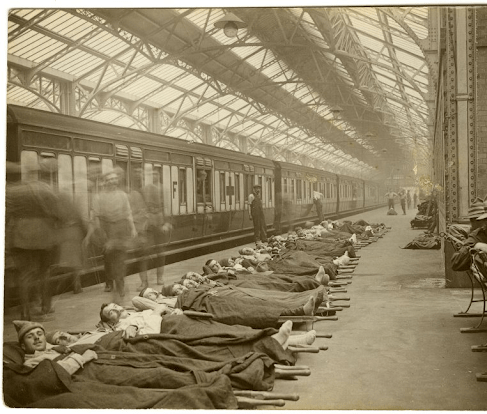
Wounded from the train waiting to be taken to hospital
While the war on the ground was grinding to a halt, that in the air was just starting. The first aerial threat came from German airships called Zeppelins. At 11,000 feet, Zeppelins could turn off their engines, drifting silently to carry out surprise attacks. Successive damaging attacks caused public outcry and government embarrassment.

In June 1917 the first air raid on Britain by huge Gotha bomber aircraft took place. To meet this latest threat, new tactics in aerial combat were developed. Wireless communication, coupled with sophisticated observation and reporting of enemy movements, enabled fighters to be despatched to meet the bombers. Anti-aircraft fire and barrage balloons also forced enemy aircraft higher, compromising their bombing accuracy. By May 1918, over 60 Gothas had been destroyed and the aerial threat to Britain was effectively over.
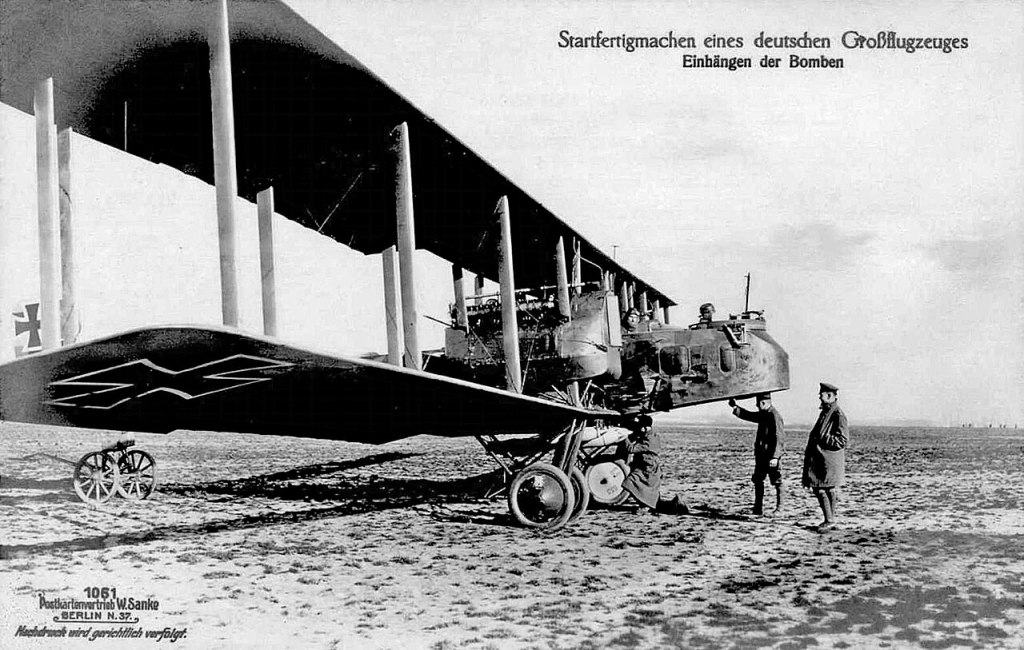
English casualties from WWI Gotha bomber raids were estimated at approximately 4,000 killed or injured. Targeted on the civilian population, rather than military sites, these aerial attacks emphasised the random quality of warfare. Out of the blue, anyone living in a town or port within range of bombers and airships could lose their life. In terms of night raids, German bombers needed fine weather and moonlight to spot their targets so, when flying conditions were good, people living in populous, central London districts sought refuge in the Underground. By autumn 1917, 86 Tube stations had been made available as public shelters with a capacity of a quarter of a million.

Today we attended the Remembrance Day ceremony in our local town Down Under. Despite being 17,400 km (about 10,800 miles) from our French village the format was the same, only the names and flag were different.
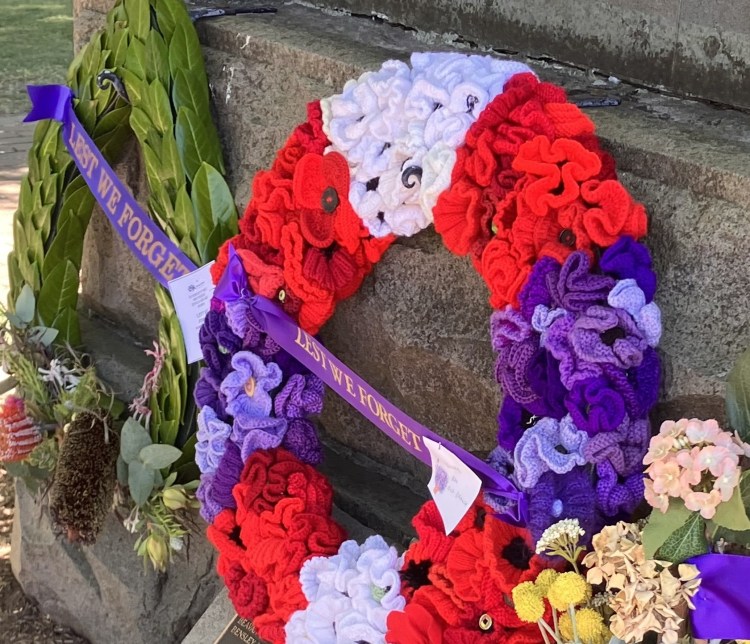
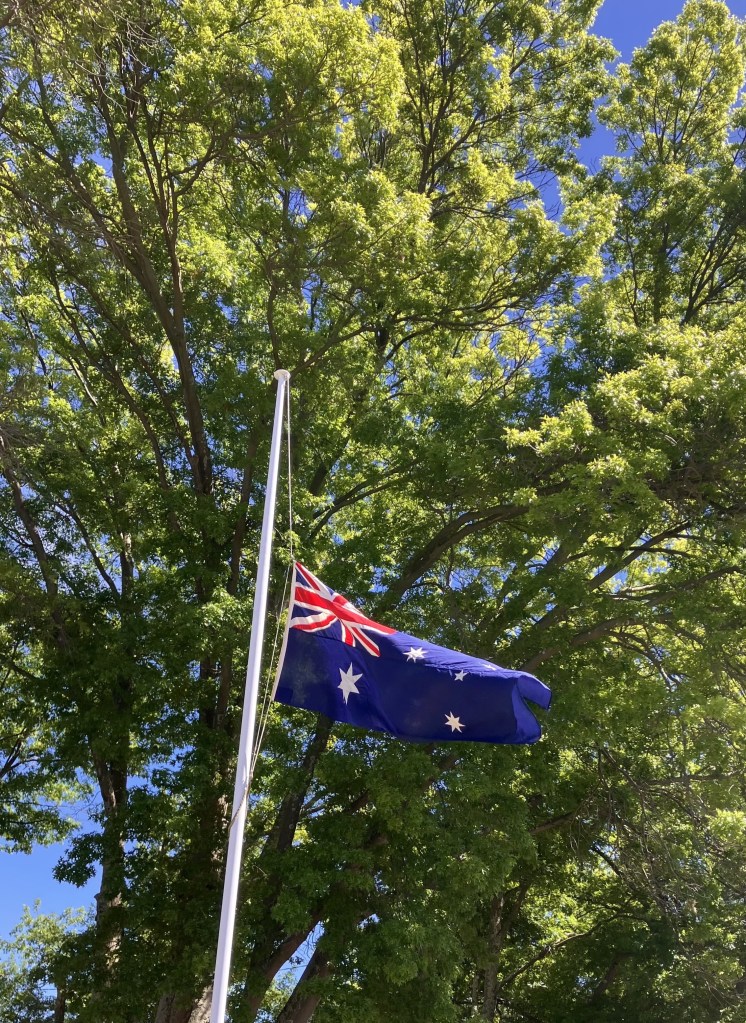
WE WILL REMEMBER THEM

