
When under threat this animal curls into a tight ball. The tough, overlapping scales shield it against the sharp teeth and claws of these predators, but are defenceless against humans. These slow-moving, gentle creatures are seriously threatened by poaching and have become one of the most highly traded mammals on eastern markets. Any idea what it is? Perhaps this will help…………..
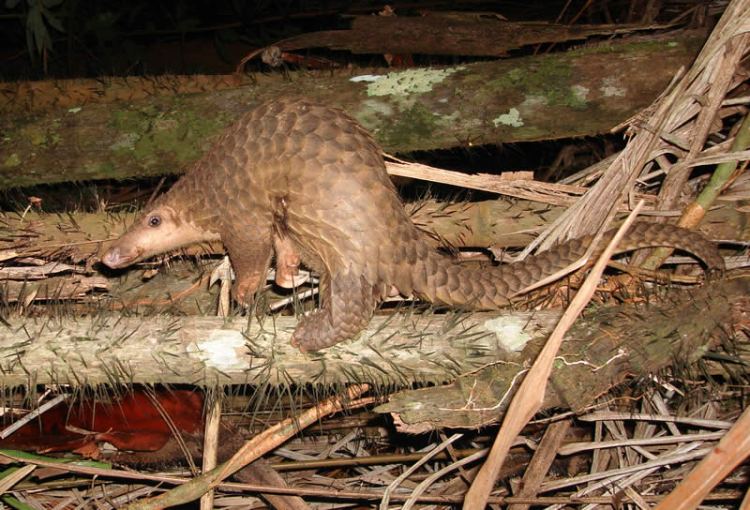
According to one Asian newspaper the authorities had identified at least 200 people who contracted the virus in 2019 and who came under medical surveillance; the earliest case being 17 November, weeks before the emergence of the new virus was officially announced. So, six years ago today, this animal became the most high-profile/notorious mammal on the planet. It’s the pangolin. Candidates for the origin of the outbreak of Covid-19 were this harmless creature and/or bats. Initially the finger of blame was pointed at the wildlife trade in the wet market of Wuhan in China, but an investigation by a team from Oxford found that both bats and pangolins had an alibi – neither was there! The WHO requested that China share more detailed information about the animals sold at markets in Wuhan, and information on work done and biosafety conditions at laboratories in Wuhan.

The constantly wet floors due to the melting of ice used to keep food from spoiling, the washing of meat and seafood stalls and the spraying of fresh produce give the market its name. We visited this one at La Cruz in Mexico, which was an example of an organised, clean and well regulated market. Not all are like this above.

If sanitation standards are not maintained, wet markets can spread disease. Those that carry live animals and wildlife are at especially high risk. Because of the openness, newly introduced animals may come in direct contact with traders and customers, or to other animals which they would never interact with in the wild. This may allow for some animals to act as intermediate hosts, helping a disease spread to humans.

Madame and I were living in SW France when reports started to come through about this new coronavirus. It’s doubtful if any countries escaped Covid, but some are reluctant to produce figures. The first three cases reported in France, in January 2020, had a history of residence in, or travel to, China but without any exposure to wet markets, sick people or live animals. France was hit hard and fast and was unprepared. Moreover, just before the pandemic, the public health system had been affected by months long protests and strikes by hospital personnel demanding more resources.

A key event in the spread of the disease across France was the annual assembly of the Christian Open Door Church between 17 and 24 February 2020 in Mulhouse, a city in the north-east near the Swiss and German borders. This was attended by about 2,500 people, at least half of whom are believed to have contracted the virus. ‘We Prayed for Healing. God Brought a Pandemic.’ (Christianity Today December 2020). However, a report suggested that the impact of the church meeting had been overstated, and that the virus had been present in the region since November 2019, and that the Church was “only one link in the chain of virus transmission”. Whatever the truth, once lockdown was imminent near panic set in. Those who could escape did so…….
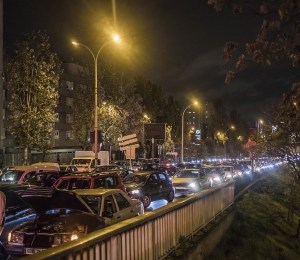
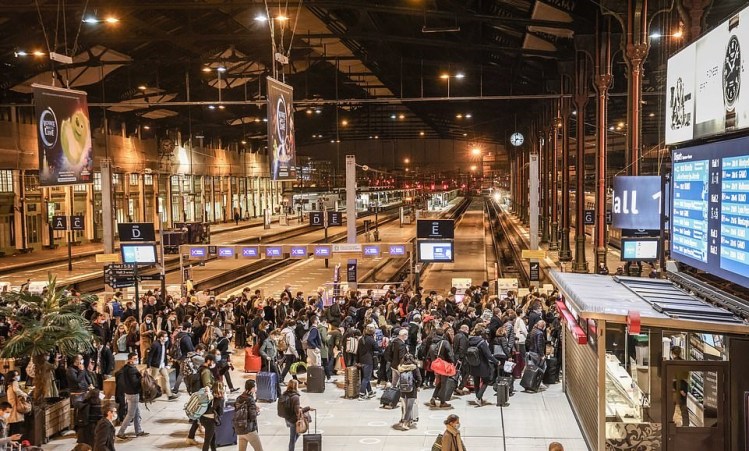
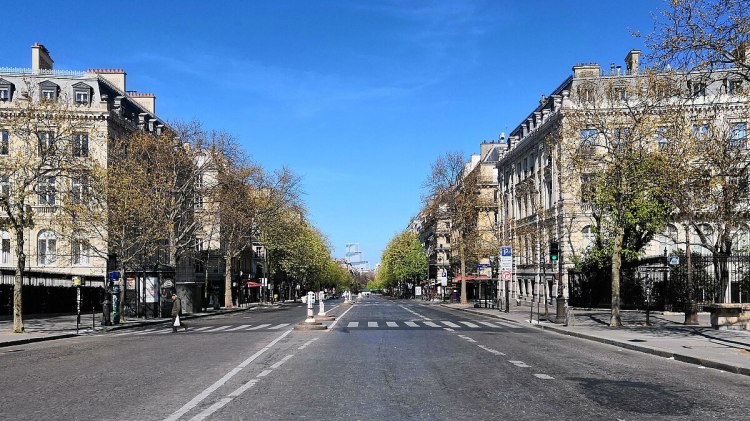
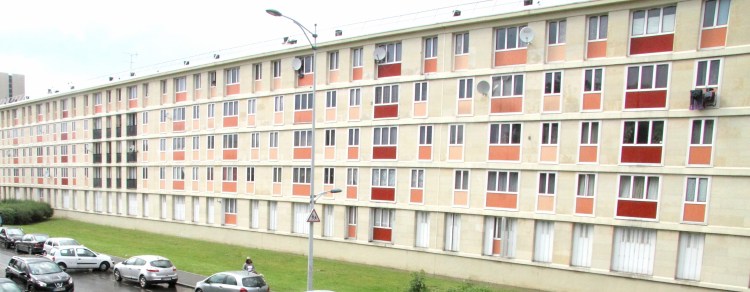
So, all these people fleeing from Paris, where did they go? To their holiday homes? The Atlantic coast was popular, as was the south west of the country where we lived. Inevitably they brought Covid with them and were not popular locally. Meanwhile, diagonally across France, Paris with its banlieus (suburbs) was badly affected. Confined to their apartments residents were affected emotionally as well as physically.
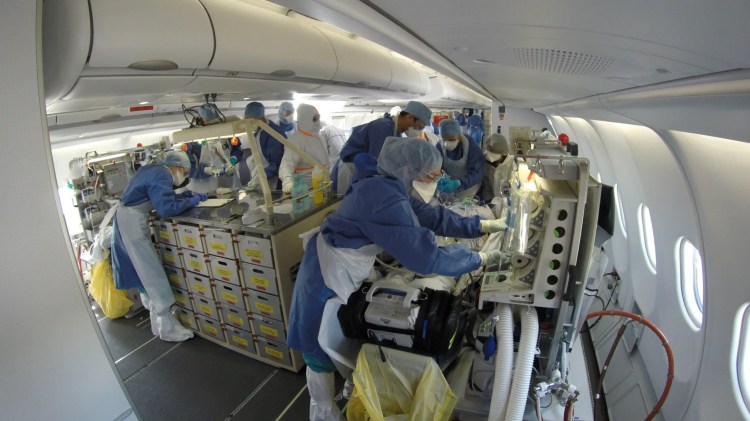
The hospitals in the Alsace region in the north east were soon overstretched. The French military used its airborne hospital, for the first time for civilians, taking patients from Mulhouse to Bordeaux. Ambulances, helicopters and aircraft carried the most serious cases to hospitals which had the medication and equipment necessary to treat serious them.
Mulhouse is close to the German border

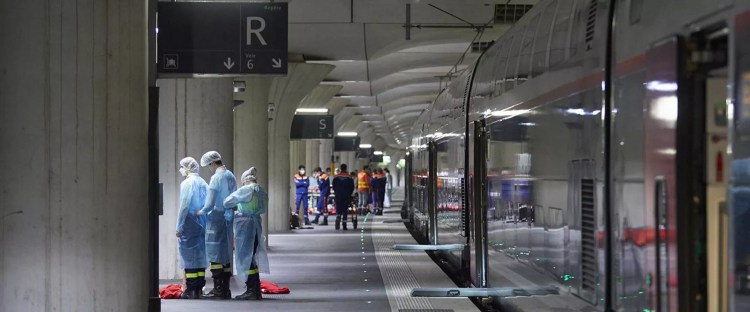
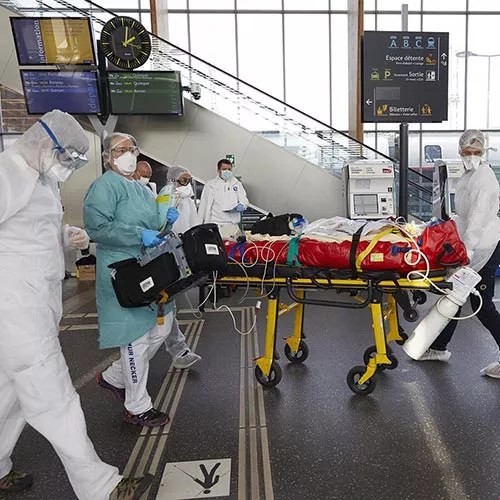
But most were carried in specially adapted trains.

The first, of three, lockdowns for us started on 17 March and continued for two months. Living in the country during this period had its advantages as exercise was limited to a kilometre from the house. We could leave the garden and walk down to the river or up into the hills. At all times we had to carry ‘une attestation’, which we had to take with us on the rare occasions we were allowed out, i.e. shopping. Translation…….
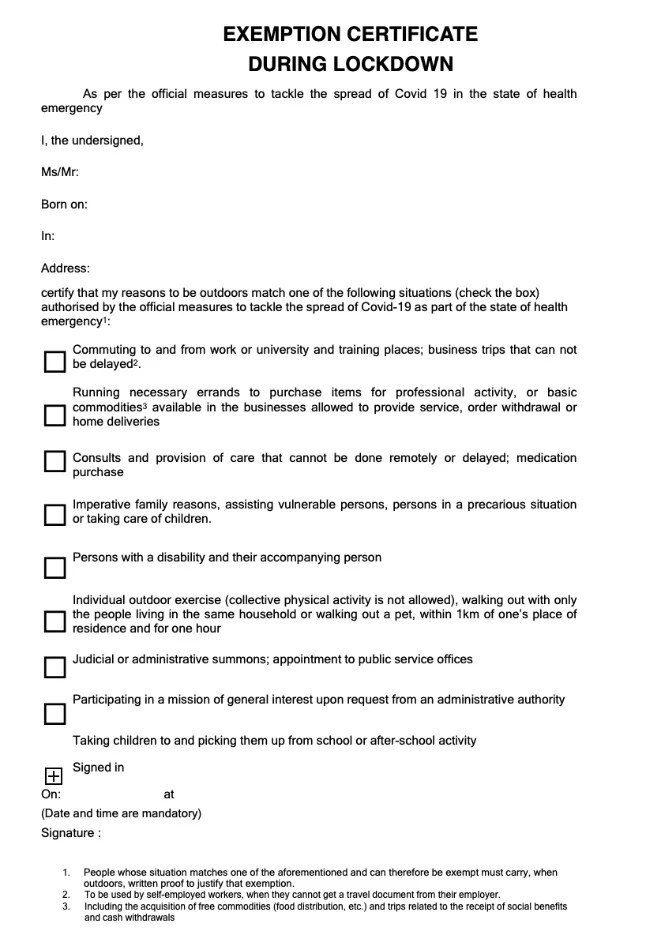
One Sunday, at the start of the lockdown, we went for a longer walk, down to the river then climbed up to Marc’s farm and back, about 4 km. No rules were broken because at no point were we more than one kilometre from the house (well, that’s how we interpreted it). It meant that the last twenty metres to our house were by road. Almost made the front gate when a police car materialised from nowhere. The two gendarmes didn’t look old enough to carry firearms and our attestation wasn’t valid as the date was in pencil (trying to save the ink cartridge). Fortunately, it was midday and France closes for two hours for lunch, so they didn’t linger.

Covid-19 created conditions that France had never seen before. For the first time in its history, the SNCF (Société nationale des chemins de fer français), France’s state-owned railway operator, carried intensive care patients to hospitals in high-speed TGVs. On 26 March the first train left Paris for Angers. Behind the scenes, specialists had spent 48 hours preparing the train.
The future? We all want to move on from COVID-19 and, with many of us vaccinated, you might be wondering if it’s time to let those pandemic worries go for good. But the virus continues to evolve and the likelihood of it disappearing is low. It is expected to become an endemic disease, similar to the flu, meaning it will likely become a constant but manageable presence in the population.
freefromlockdown.com
 Another Down Under diary